
The next steps in children and young peoples’ mental health research: inspiration at at the Big Emerging Minds Summit
Hi everyone!
I hope you are well! My goodness, it’s been a busy few weeks for me – I don’t know about you but I definitely need some dedicated time to crawl under my duvet and watch Tiktoks. So today, I’m breaking up the poetry posts (shock horror!) to tell you a little bit about a wonderful event I went to on Monday – we’re going to talk all things children and young peoples’ mental health research!
If you are new to my website or have come from the world of poetry – I currently work in academic mental health research, and have worked in primary care mental health services too! I hope to train as a clinical psychologist, which involves supporting service users, conducting research and service evaluation, as well as taking leadership roles within services. I am super interested in all of those strands of work, and am especially passionate about children and young peoples’ mental health!
I’ve been following the Emerging Minds research network since I was taught at university by a few researchers involved in it; Emerging Minds co-ordinates projects and distributes funding for research that has the broad aim of reducing the prevalence of mental health issues in children and young people. As they are coming to the end of their funding in November 2022, they held the ‘Big Emerging Minds Summit’ to celebrate and educate about the work that has been accomplished and is in progress with their support.

I went along to the Big Emerging Minds Summit this Monday, and I was blown away! To hear from so many clinicians and researchers in the area talking about truly groundbreaking work was invaluable. I had the opportunity to mingle with these wonderful minds and absorb the learnings like a sponge…my imagination and ideas were running wild by the end of it! I want to tell you a little bit about what I learned from each of the sessions I attended (oh how I wish I could’ve attended all of them and been in 5 places at the same time), so here is a quick content warning: mentions of serious mental illness, self-harm, suicide, trauma, racism. You can find out about all of the sessions and what went on at the summit on the Emerging Minds twitter account.


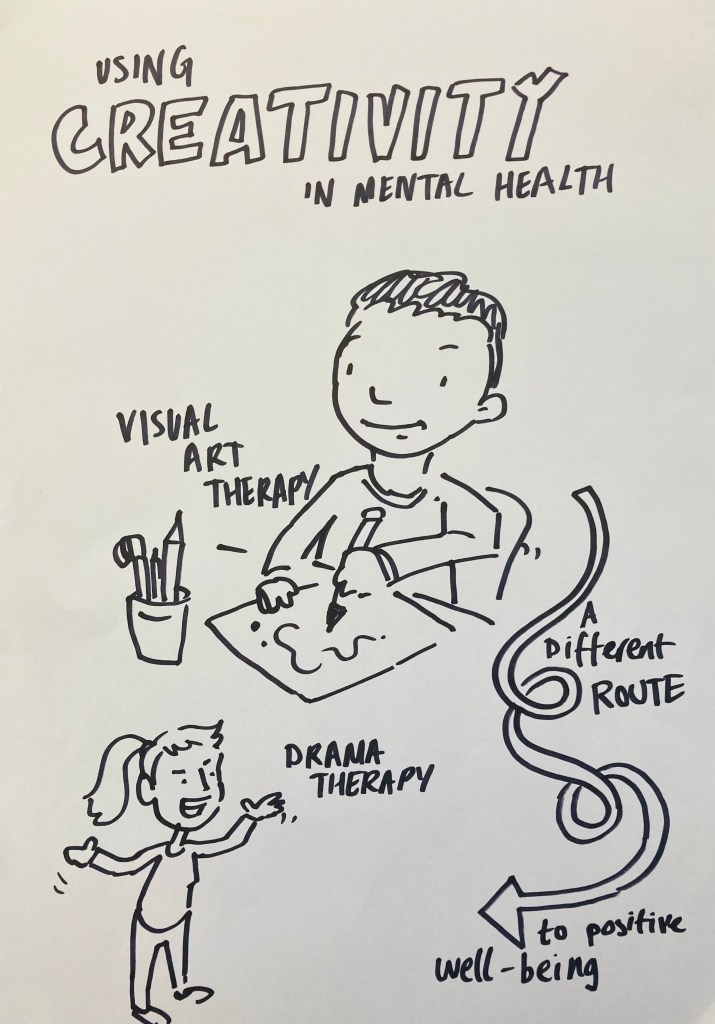
The first session I attended was on creative therapy as a response to self-harm in young people. Needless to say, this was my bread and butter. Dr Vlad Kolodin and Julia Ruppert told us about their pilot studies on using creative therapies such as drama therapy and positive visual reframing to support young people with lived experience of self-harm. It was fascinating to hear from some of the young people themselves about their experience. Creative activity is known to enhance mood and release cognitive resources; in comparison to standard interventions used in mental health services, creative therapies have less limits and structured rigidity. One key reflection from one of the young people who took part was that it was a liberating experience. It was so interesting to hear this, as I would use the same word in describing the act of performing my poetry onstage. We discussed that focusing on personal resources and enabling free expression was more important than the ‘problem’ itself, and that creative therapies facilitate this by giving control back to the young person. The leaving note was that interventions must adapt to young people, not the other way round. I thought that was a powerful sentiment and one that isn’t necessarily in practice right now. I love the idea of using creative therapy to address negative emotions and affect – they could potentially play the role of readying a young person for the intensity of talking therapy, as well as helping them come to terms with difficult emotions before trying to deal with behaviour. This was such a brilliant start to the day and I was bursting with poetry/mental health passion! You can find out more about this work on the Collective Arts website.

The second session was equally as fascinating! This session was on finding the words to explain unspoken experiences. Led by Dr Sarah Parry, the United Senses and Experiences network talked to us about their work on identifying how to improve understanding, support and care for young people with multisensory experiences e.g. hearing voices. I learned about what young people with lived experience felt were the priorities in this field: earlier early intervention in child and adolescent mental health services (CAMHS), exploring the eating disorder voice (that acts like a barrier to talking therapies), support in schools, self-care materials, reliable information and a digital platform to help with coping skills, policy brief and the relationship of voices, visions, self-injury and suicidal thoughts. The team has already started delivering on some of these priorities, with the very exciting in-development Livv app that combines self-care, reliable information, a discord server encouraging peer support, and a space to explore and choose coping skills instead of having them suggested to you (‘have you tried going for a walk?’). It was great to hear about an amazing meme-making workshop that the team coordinated also, which was a creative, non-directive approach to learning more about young peoples’ feelings and experiences of mental health support. Young people in this workshop curated a fantastic library of memes (as well as created their own), which were themed around: unhelpful coping strategies services suggest, not being taken seriously/believed, appreciating when professionals and services acknowledged their experiences. I absolutely loved this idea – I found that this workshop really widened conversations around creatively listening to what young people find helpful/unhelpful and act on that in order to facilitate their expression around multisensory experiences, which can often be so difficult to talk about. Have a delve into what the USEN network are up to here. I also just personally really want a mental health meme library.
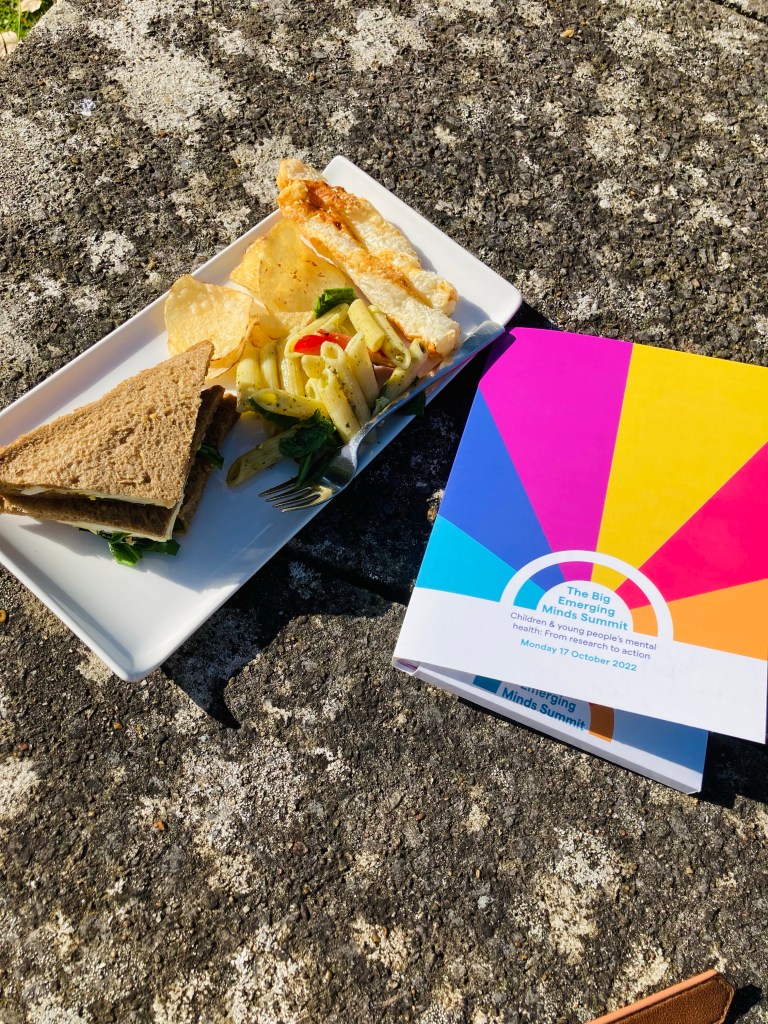
Phew! Breaking up the post with a picture of my lunch…(yum, thanks St. Catz!)
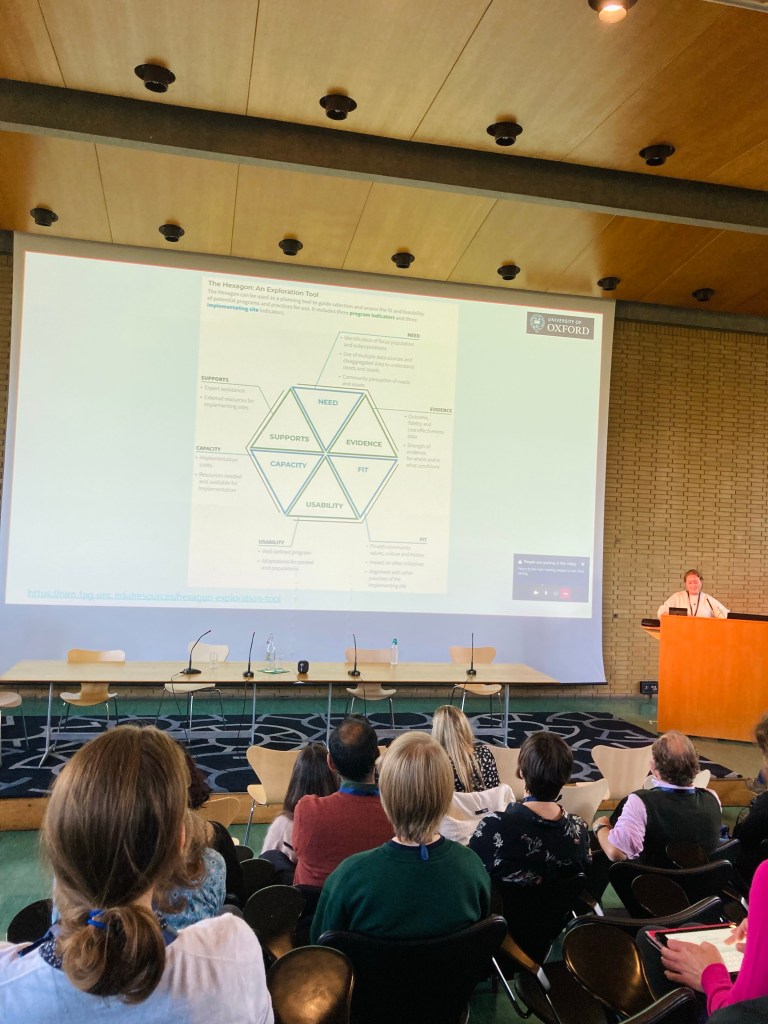
It was a great change of angle for my third session, which was on implementation of evidence and research in children and young peoples’ mental health research. Led by Dr Holly Bear and Dr Tim Clarke, this session focused on how the clinical research we do is translated and implemented into clinical practice. I’ve always been interested in barriers and facilitators to access, but it was so interesting to hear about barriers and facilitators to implementation. Resistance of change, lack of resources and lack of structure in services seemed to feature heavily. The practical tips that Holly and Tim offered on the back of their research were: ringfencing funding for implementation in services, prioritising an implementation process beyond the end of clinical trials, training and upskilling of all staff in services, and adoption of implementation research designs by research teams. As an early career researcher/aspiring psychologist, I found it incredibly useful to think about embedding implementation from the outset of any idea/research – thinking about the practicalities and details of rolling a treatment/intervention out often feels like jumping the gun, but it is so important. You can find out more about this work here.

The final session was…wow! Truly the highlight of the day. I had the privilege of hearing from the Optimistic Minds Legislative Theatre Group; they are a group of young people who have lived experience of mental health issues and have come together to push for meaningful change across policy and services, doing this through an approach I had never heard of before…legislative theatre! So we watched a short play they had created about their experiences of how shoddy the mental health system has been across the board: lack of diversity, bureaucracy, insensitivity, being passed on from service to service with no help being offered and nobody actually listening! It was moving, especially as these experiences rang true with some of my own. But then, they got us involved! They asked us to think about what we would have done to help the protagonist of the play in an ideal world. They then chose a volunteer to come up and improvise the exact scene of the play at which they would have intervened, seeing what would happen differently if they did so. Optimistic Minds take this show to policy-makers and get them to see what the gaps are in such a novel way, and in this vein have secured pledges from decision-makers in Greater Manchester already (find out more here)! This session definitely empowered me and my mind opened to new possibilities of enacting change.
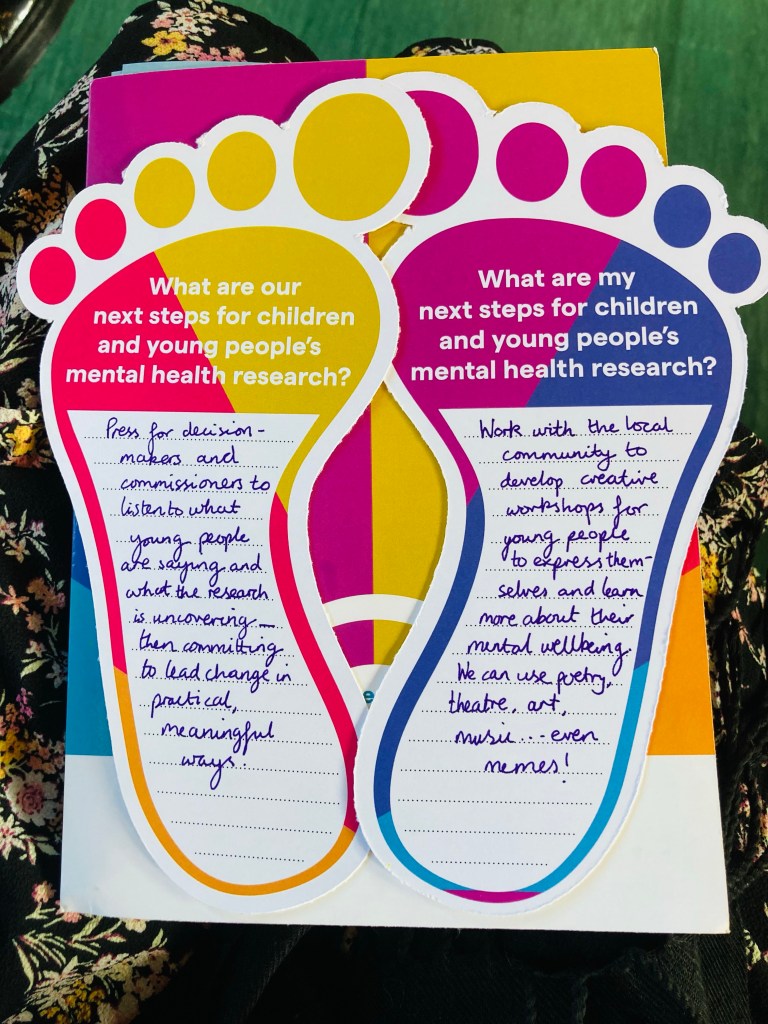
What I loved most about this experience was that it wasn’t only informative and educational – it was encouraging and inspiring. There was a real acknowledgment of where we are falling short as a research field, and the need for implementation of better interventions, research centred around young peoples’ own priorities and better policy support for their mental health. I loved that we got to make some pledges for both our own next steps and what we thought the field’s next steps should be. It really made me reflect on my existing knowledge and ideas as well as the new inspiration from the summit. It was a whale of a time for a little research assistant like me!
Whew, that was a hefty post! If you are new to reading about mental health research, do let me know if anything is confusing! You can drop a comment or message me using the contact form on the homepage! All in all, the field is full of exciting advances and the right questions are being asked.
Wishing you a wonderful rest of the week!
SS xx
Check out what I’ve been up to lately on my Instagram…


Proudly powered by WordPress
 memoona ahmed
Leave a comment